
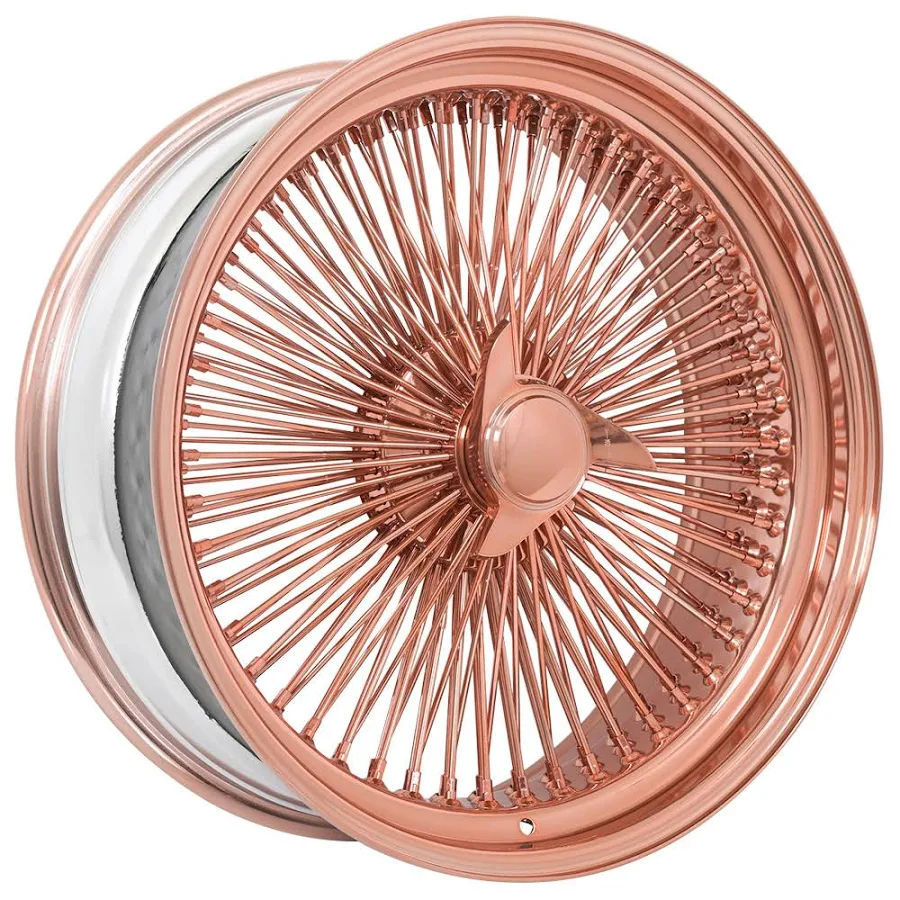
There is no wheel in the world that carries more cultural weight more historical significance or more immediate visual impact than a set of well-chosen wire wheels on the right vehicle.
From the chrome 72-spoke sets that first appeared on the Impalas and Cadillacs cruising Whittier Boulevard in East Los Angeles in the 1950s to the 30-inch chrome forged show car setups commanding every major custom car event in America today wire wheels have been the defining wheel choice of American custom car culture for over seven decades. They are not just wheels they are a declaration of knowledge pride and commitment to a tradition that has shaped American automotive culture more profoundly than any other single element.
This complete guide covers everything a builder needs to know about wire wheels the history of the wire wheel in American lowrider and custom car culture the complete breakdown of spoke counts lace patterns and finishes the sizing landscape from classic 13-inch traditional builds to commanding 30-inch show car setups and exactly how to choose the right wire wheel configuration for your specific build.
The History of Wire Wheels in American Lowrider Culture
The wire wheel’s journey from European sports car accessory to the defining symbol of American lowrider culture is one of the most fascinating stories in automotive history a story of cultural adoption transformation and elevation that spans seven decades and continues with extraordinary vitality today.
Wire wheels were first developed for bicycle use in the late 19th century the tensioned spoke design that defines the wire wheel allowing for a wheel of extraordinary strength relative to its weight by distributing load across dozens of individually tensioned spokes rather than through a solid structure. This engineering principle was adopted for early automobiles and motorcycles and became associated with European sports cars particularly British manufacturers like Dunlop and Rudge-Whitworth whose wire spoke wheels appeared on racing and sports cars through the 1920s 1930s and 1940s.
The wire wheel arrived in American custom car culture through an unexpected path the availability of wire spoke wheels from British sports cars in the used parts market of the late 1940s and early 1950s. Lowrider builders in East Los Angeles a community largely composed of Mexican-American young men who were expressing their identity and pride through the meticulous customization of American sedans recognized immediately that the intricate chrome spoke design of these European-sourced wire wheels was something genuinely extraordinary.
Fitted to a lowered Impala or Cadillac the chrome wire wheel created a visual effect unlike anything previously seen in American custom car culture the intricate spoke pattern catching California sunlight with an almost liquid shimmer as the car rolled slowly down the boulevard. The wire wheel became the signature of the lowrider aesthetic almost immediately its visual complexity and craft requirement making it a perfect embodiment of the lowrider philosophy of transforming ordinary objects into extraordinary expressions of pride and skill.
Through the 1960s and 1970s the lowrider wire wheel culture developed its own vocabulary spoke counts increasing from the original 60 and 72 spoke configurations toward 100 and beyond as builders competed for greater visual density and brilliance. Lace patterns multiplied from standard straight lace to reverse cross lace triple cross lace and more exotic configurations that required extraordinary skill to execute correctly. Finishes evolved from standard chrome through gold two-tone gold and chrome and eventually to the 24-karat California gold plating that represents the highest standard of wire wheel craftsmanship available today.
The geographic spread of lowrider culture from its Southern California origins through the Southwest and into the Midwest and Southeast brought wire wheels to new communities each one developing its own regional preferences for spoke counts finishes and lace patterns while maintaining the shared cultural vocabulary of the wire wheel tradition.
The donk culture that emerged from the South particularly Florida and Georgia in the late 1990s and 2000s took the wire wheel to new dimensional extremes. Where traditional lowriders had established 13 to 16-inch wire wheels as the correct size for classic builds donk builders pushed first to 20 inches then 22 then 24 then 26 and beyond adapting the wire wheel form to the dramatically larger wheels demanded by the donk aesthetic. Today 26 28 and 30-inch wire wheels represent the cutting edge of large-diameter wire wheel technology chrome forged constructions that carry the traditional wire spoke design to sizes that would have seemed impossible to builders from the original lowrider era.
Understanding Spoke Counts The Language of Wire Wheels
The number of spokes on a wire wheel is one of the most important specifications not just for visual character but for cultural communication. Anyone who truly understands wire wheel culture reads spoke counts the way a reader reads words immediately recognizing what each count says about the builder who chose it and the build it is on.
60 Spoke Classic Entry
The 60-spoke wire wheel is the entry point of the traditional wire wheel world the lowest spoke count in the standard lowrider wire wheel range and the simplest and most open spoke pattern available. At 60 spokes the spaces between the spokes are wide and the overall appearance is clean and uncluttered a wheel that reads clearly from a distance with a light airy quality that higher spoke counts cannot provide.
The 60-spoke has a specific visual character that suits certain build types particularly well traditional bomb builds where the smaller wheel size (13-14 inch) and lighter visual weight of 60 spokes suits the delicate proportions of the vehicle. The triple cross lace pattern on a 60-spoke wheel creates a surprisingly complex visual effect from the crossed spoke configuration even at this lower count.
72 Spoke The Cultural Foundation
The 72-spoke wire wheel is the most historically significant spoke count in the entire wire wheel world the configuration that defined the early lowrider movement and remains the most period-correct choice for traditional builds. At 72 spokes the wheel delivers a clean open pattern that was immediately recognizable as distinctive and intentional when it first appeared on East Los Angeles streets in the 1950s a step above factory steel wheels that communicated craftsmanship and pride in a language that every observer could read.
For any builder whose build references the founding era of lowrider culture bombs hoppers street lowriders traditional show cars the 72-spoke wire wheel is the most authentic and culturally grounded choice available. It is the spoke count that started everything and the one that experienced lowrider judges and enthusiasts most closely associate with the purest expression of the tradition.
100 Spoke The Show Standard
The 100-spoke wire wheel is the standard for serious show car builds the spoke count that delivers the visual density and light-catching brilliance that show judges and enthusiasts expect from a competition-level wire wheel. At 100 spokes the spoke web is dense enough to create the signature shimmer effect that wire wheels are celebrated for each spoke contributing to a layered complex appearance that rewards close inspection at any show.
The 100-spoke is the most widely available spoke count across the largest range of sizes and finishes from classic 13-inch traditional lowrider sets through 26-inch donk packages. For any builder who is uncertain about spoke count the 100-spoke is the safe and correct choice for a serious show car build.
150 Spoke Premium Show
The 150-spoke wire wheel delivers a significantly denser and more visually complex spoke web than the 100-spoke at 22 inches and above the 150 spokes create an extraordinary richness of detail that makes the wheel appear almost solid with reflective chrome or glowing gold depending on the finish chosen. The 150-spoke communicates serious show car intent and genuine financial commitment to the wire wheel detail a spoke count that signals the builder is operating at a level beyond the standard.
200 Spoke and Beyond Competition Level
Wire wheels at 200 spokes and above represent the absolute top of the show car wire wheel world spoke densities so high that the wheel face appears nearly solid while still maintaining the unmistakable character of a genuine wire spoke design. At 204 spokes the most common competition-level count the wheel creates an almost liquid shimmer effect under show lighting that lower counts cannot replicate. Competition-level spoke counts are for builders who are specifically targeting the highest award categories at serious show car events.
Lace Patterns The Detail That Shows True Knowledge
The lace pattern the way in which the spokes connect hub to rim is the detail that most clearly communicates the builder’s depth of wire wheel knowledge. Where a casual observer might notice the spoke count and finish a serious enthusiast or show judge looks immediately at the lace pattern reading in it the builder’s understanding of wire wheel tradition and their commitment to correct cultural execution.
Straight Lace
The straight lace is the foundational pattern spokes running in clean parallel lines from hub to rim with consistent spacing and no crossing. The straight lace reads as clean structured and architecturally precise the visual equivalent of a well-pressed suit. It is the most traditional pattern and the most period-correct choice for builds that reference the earliest era of lowrider wire wheel culture.
Reverse Lace
The reverse lace takes the straight lace configuration and angles the spokes in the opposite direction creating a subtle but immediately noticeable directional character that experienced observers recognize instantly. The reverse lace adds visual movement to the spoke web the spokes appearing to sweep in a consistent direction that suggests motion even when the wheel is stationary.
Cross Lace
The cross lace pattern has each spoke crossing its neighbour before connecting to the rim creating a layered visual effect where the spokes appear to weave over and under each other for a depth and complexity that straight lace cannot deliver. The cross lace is a more sophisticated pattern than straight or reverse lace and communicates a builder who has gone beyond the foundation.
Reverse Cross Lace
The reverse cross lace combines the directional character of reverse lace with the layered depth of cross lace each spoke crossing its neighbour in the reverse direction for a pattern that creates both directional sweep and visual depth simultaneously. The reverse cross lace is one of the most celebrated patterns in the lowrider wire wheel world complex enough to reward close inspection while remaining visually coherent from any distance.
Triple Cross Lace
The triple cross lace is the most complex standard lace pattern each spoke crossing three neighbours before connecting to the rim for a spoke web of extraordinary visual density and intricacy. The triple cross lace requires the most skill to execute correctly and creates the most visually complex result a wheel that reveals more detail the closer you look. For show car competition builds where the judges examine every element closely the triple cross lace communicates mastery of the wire wheel tradition at its highest level.
Finishes Choosing Chrome or Gold
The finish choice on a wire wheel is one of the most culturally significant decisions in any custom build and it deserves the careful consideration of every builder who makes it.
Chrome is the authentic foundational choice the brilliant mirror-like silver finish that defined the wire wheel aesthetic from its earliest days in American custom car culture. Chrome is the most versatile wire wheel finish it pairs with any vehicle colour any tire sidewall design and any build style from the most traditional period-correct bomb to the most contemporary donk build. Chrome is always correct.
Gold is the prestige elevation the warm luminous finish that communicates a level of investment and cultural commitment beyond the standard chrome foundation. Gold is the choice of builders who have mastered chrome and are making a deliberate declaration about where their build stands in the hierarchy of the culture. Pure 24K California gold the highest standard of gold wire wheel plating developed and refined in Southern California is the most prestigious wire wheel finish available at any price.
Gold centre chrome lip is the sophisticated two-tone combination gold inner spokes and hub with a chrome outer lip for a wheel of extraordinary visual depth that neither all-chrome nor all-gold can achieve alone. The gold centre chrome lip is among the most celebrated wire wheel configurations in the show car world a choice that honours both the chrome foundation and the gold elevation simultaneously.
Rose gold is the contemporary luxury option a warm metallic finish with subtle pink undertones that bridges traditional wire wheel gold heritage and modern premium aesthetics. Rose gold is rarer and more contemporary than standard or California gold making it the choice of builders who want to reference tradition while bringing something distinctly new.
Sizing From Classic 13-Inch to Show-Stopping 30-Inch
Wire wheels are available across a dramatic range of diameters each one associated with specific build types cultural contexts and visual aesthetics.
13-14 inch Traditional Lowrider
The foundational size of traditional lowrider culture the diameter that built the entire wire wheel tradition. 13 and 14-inch wire wheels belong on traditional bomb builds hoppers and classic show lowriders where the smaller wheel size with tall sidewall tires creates the period-correct proportions of the classic lowrider aesthetic.
16-17 inch Classic Show
The standard size for classic show lowriders and traditional lowrider builds that run slightly larger wheels than the original bomb era configurations. The 16×7 with 225/60R16 Vogue White/Gold tires is one of the most celebrated complete setups in traditional lowrider culture.
20-22 inch Contemporary Show
The transition size range large enough for contemporary custom builds and luxury vehicle platforms while remaining culturally connected to the wire wheel tradition. 20 and 22-inch wire wheels on luxury sedans and custom builds create a contemporary show car aesthetic that references tradition while embracing modern scale.
24-26 inch Premium Donk
The standard size range for serious donk and slab builds large enough to command attention and fill the wheel arches of full-size American platforms completely. 24 and 26-inch chrome wire wheels on a Box Chevy Caprice or Buick Roadmaster are among the most celebrated combinations in donk and slab culture.
28-30 inch Elite Show
The most commanding and exclusive size range in the wire wheel world diameters that make an immediate and unmistakable statement about the level of investment and commitment in any build. 28 and 30-inch wire wheels are for builders who want to stand at the absolute top of the size hierarchy a position that very few are willing or able to occupy.
Choosing the Right Wire Wheel for Your Build
Traditional bomb or hopper build:
72-spoke reverse cross lace in chrome or all-gold at 13 or 14 inches. Pair with 155/80R13 true whitewall or buffed whitewall. This is the most period-correct traditional lowrider setup available.
Classic show lowrider (16-17 inch):
100-spoke straight or reverse lace in chrome with gold nipples or full chrome at 16×7. Pair with Vogue 225/60R16 White/Gold for the most celebrated classic lowrider combination.
Contemporary custom build (20-22 inch):
100 or 150-spoke in chrome or gold at 20-22 inches. Consider California gold for maximum prestige. Pair with vulcanized true whitewall or Vogue CBR in your exact size.
Donk or slab build (24-26 inch):
100 or 150-spoke in chrome at 24 or 26 inches staggered. The wider rear wheel creates maximum stance impact. Pair with custom handmade USA whitewall tires in your size.
Elite show build (28-30 inch):
Chrome forged wire wheels in staggered configurations with deep lips and floating caps. The engineering demands at this diameter require forged construction. Pair with custom whitewall tires in exclusive large-diameter sizes.
Frequently Asked Questions
Q: What is the difference between Dayton and LA Wire Wheels?
Dayton Wire Wheel Co. is the most historically significant and respected wire wheel brand in American custom car culture a company with a direct lineage to the original wire wheel tradition. LA Wire Wheels is a contemporary manufacturer producing quality wire wheels for the modern show car market. Both brands deliver excellent products Dayton carries specific cultural weight and prestige that LA Wire Wheels does not have simply due to its historical position in the culture.
Q: Do wire wheels require special tires?
Wire wheels require tires appropriate for the wheel size the same sizing rules that apply to any wheel apply to wire wheels. The cultural tradition of pairing wire wheels with whitewall tires Vogue or custom handmade whitewall is not a technical requirement but a cultural one that serious builders follow because the combination is the most authentic and show-appropriate choice.
Q: Are wire wheels hard to maintain?
Chrome wire wheels require regular cleaning every spoke must be cleaned individually which is more time-intensive than cleaning a solid spoke or cast wheel. Spoke nipple areas are particularly prone to collecting road grime and require attention. Gold wire wheels require similar care with the additional consideration of using cleaners appropriate for gold plating. The maintenance commitment is part of the wire wheel culture the meticulous care of the wheel is an expression of the same pride and craftsmanship that the wire wheel itself represents.
Q: Can wire wheels be used for daily driving?
Yes wire wheels are genuine structural wheel components built to meet the same load and safety standards as any other wheel. The spoke tension construction that defines the wire wheel is a legitimate engineering approach that delivers excellent strength-to-weight characteristics. Many wire wheel owners drive their builds daily the maintenance commitment is higher than a cast wheel but the structural capability is fully equivalent.
Q: What causes wire wheels to rust?
Chrome wire wheel rust is most common at the spoke nipples and in the crevices between spokes areas where road salt moisture and contaminants can accumulate and initiate corrosion under the chrome plating. Regular thorough cleaning after exposure to road salt or wet conditions and the application of a quality chrome protectant significantly extends the life of the finish. Triple-plated chrome the highest quality chrome finish available provides the greatest resistance to rust and corrosion.
Shop Wire Wheels at Alexander’s Tire Services
Alexander’s Tire Services carries one of the most comprehensive wire wheel selections available from any online retailer traditional 13-inch lowrider sets through commanding 30-inch show car packages in chrome gold rose gold and two-tone finishes from Dayton LA Wire Wheels and more.
Alexander’s Tire Services — Where Premium Meets Passion.