
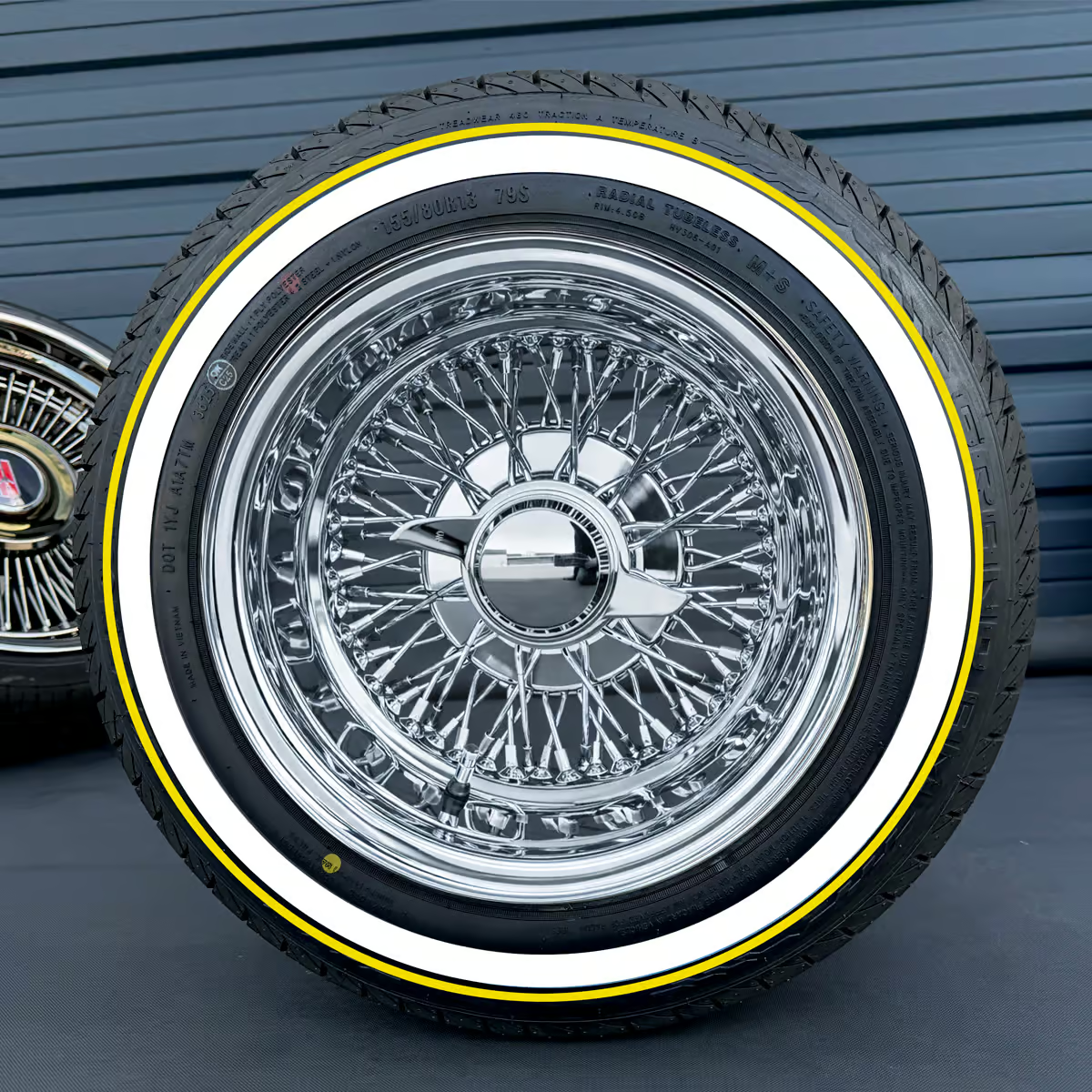
What Are Wire Wheels? The Complete Guide to History, Spoke Counts, Finishes & Lace Patterns
What are wire wheels? If you have ever seen a classic lowrider gliding down a boulevard with a set of spinning, mirror-bright chrome spokes catching sunlight from every angle you have already seen wire wheels in their most celebrated and most culturally significant form. Wire wheels are one of the most iconic, most recognizable, and most culturally powerful automotive accessories in American car culture and yet many drivers who admire them from the curb have never had the complete story explained from beginning to end.
This guide changes that. From the origins of the wire wheel in the early days of the automobile, to the spoke counts, finishes, lace patterns, and sizing considerations that serious builders think about before every purchase this is the most comprehensive wire wheel guide available anywhere online. Whether you are building your first lowrider, restoring a classic American car, or simply want to understand why wire wheels matter so much to so many people read on. By the time you finish this guide, you will know everything there is to know about wire wheels and exactly how to choose the right set for your build.
What Are Wire Wheels and Where Did They Come From?
So what are wire wheels, exactly? At their most fundamental level, wire wheels are wheels constructed using a large number of thin metal spokes typically made from stainless steel that connect the outer rim of the wheel to the central hub using a system of tension rather than compression. Unlike conventional cast aluminum or steel wheels where the rim is supported by a rigid, solid structure, wire wheels use the tension of individually tightened spokes to maintain the wheel’s shape and carry the vehicle’s load the same engineering principle used in a bicycle wheel, scaled up dramatically for automotive applications.
Each spoke is threaded at one or both ends and anchored at the hub and rim using precisely tensioned fasteners a system that distributes load evenly across every spoke in the wheel rather than concentrating it at a single structural point. This tension-based architecture gives wire wheels their characteristic visual appearance the open, intricate web of individually visible spokes radiating outward from the hub and their equally characteristic engineering properties of lightness, flexibility, and load distribution.
The Origins of the Wire Wheel
The wire wheel was not invented for lowriders or custom cars. It was invented for the earliest automobiles of the late 19th and early 20th centuries and it was born from the same engineering tradition as the bicycle wheel, which had itself been revolutionizing personal transportation since the 1870s.
The first automotive wire wheels appeared in the late 1890s and early 1900s as manufacturers sought lightweight, strong wheel solutions for the pioneering automobiles of the era. The wire wheel’s tension-based construction offered a dramatic weight advantage over the wooden carriage wheels and early cast iron wheels that preceded it and its strength-to-weight ratio made it the preferred wheel technology for racing applications, luxury vehicles, and performance automobiles throughout the first half of the 20th century.
By the 1920s and 1930s, wire wheels had become synonymous with the most prestigious and most desirable automobiles in the world. Rolls-Royce, Bentley, Jaguar, MG, Triumph, Alfa Romeo, Ferrari, and virtually every other luxury and performance manufacturer of the era fitted wire wheels as standard equipment on their finest vehicles establishing the wire wheel’s enduring association with automotive prestige, craftsmanship, and refinement that continues to this day.
The Dayton Wire Wheel Company founded in Dayton, Ohio became one of the most respected and most historically significant wire wheel manufacturers in American automotive history, producing wheels for some of the most celebrated vehicles of the early 20th century and continuing to manufacture premium wire wheels in the United States to this day.
The History of Wire Wheels in American Lowrider Culture
To understand why wire wheels occupy such an irreplaceable and deeply emotional place in American automotive culture today, you have to understand the lowrider movement one of the most distinctive, most creative, and most culturally significant automotive subcultures ever produced in the United States.
The Birth of Lowrider Culture
The lowrider movement was born in the Chicano communities of East Los Angeles in the late 1940s and early 1950s. In the years following World War II, young Mexican-American men in Southern California began customizing their vehicles in a style that was deliberately, defiantly different from the hot rod and drag racing culture that was simultaneously emerging in other parts of California a style that emphasized beauty over speed, craftsmanship over power, and a slow, dignified, stylish cruise over an aggressive quarter-mile run.
These early lowriders lowered their vehicles as close to the ground as possible, added custom paint in rich candy colors, installed hydraulic lift systems that allowed the vehicle to hop and dance on command, and crucially fitted their cars with wire wheels. The wire wheel became the visual centerpiece of the lowrider aesthetic from the very beginning of the movement and it has remained so for over 75 years.
Why Wire Wheels Became the Soul of Lowrider Culture
The wire wheel’s connection to lowrider culture was not accidental. It was the result of a profound alignment between the wire wheel’s aesthetic character and the values that defined the lowrider movement from its earliest days.
Wire wheels are intricate. They are detailed. They reward close inspection in a way that no other wheel type does every spoke, every cross, every nipple is individually visible and individually crafted. For a movement built on the premise that a vehicle is a work of art deserving of the most meticulous attention to detail, the wire wheel was the natural, perfect choice. It was the wheel that said without a single word that the owner of this vehicle cared about every detail, had invested in the finest components available, and demanded the highest standard of craftsmanship in every aspect of their build.
The association between wire wheels and the specific classic American cars that became the foundation of lowrider culture the Chevrolet Impala, the Buick Riviera, the Oldsmobile Cutlass, the Cadillac DeVille further cemented the wire wheel’s place at the heart of the culture. These large-bodied American cars had originally been fitted with 13-inch and 14-inch wheels as standard equipment the exact sizes that wire wheels were most commonly produced in making the transition to custom wire wheel fitments a natural and aesthetically authentic upgrade.
The Evolution of Wire Wheels in Lowrider Culture
Over the decades, wire wheels evolved alongside lowrider culture itself becoming progressively more intricate, more elaborate, and more show-quality in their design and construction as the culture matured and the standards for show competition rose.
The early lowrider wire wheels of the 1950s and 1960s were relatively simple typically 60 to 72-spoke chrome designs in standard 13-inch or 14-inch fitments. By the 1970s and 1980s, spoke counts had risen to 100 and beyond and the introduction of 24K gold plating transformed the wire wheel from a simple chrome accessory into a genuine luxury statement piece that could carry a price tag rivaling some complete automobiles.
Today, wire wheels are available in sizes from 13 to 24 inches, in spoke counts from 60 to 204 and beyond, in finish combinations ranging from all-chrome and all-gold to two-tone chrome and gold, rose gold, custom colored spokes, and virtually any combination imaginable a testament to the culture’s enduring creativity and its uncompromising demand for the finest in custom automotive craftsmanship.
Understanding Spoke Counts 60, 72, 100, 144, 150 and 204 Spoke Wire Wheels
One of the most important decisions any wire wheel buyer makes is spoke count the total number of individual spokes in each wheel. Spoke count affects the visual density and complexity of the wheel face, the structural characteristics of the wheel, and significantly the price. Here is everything you need to know about every major spoke count available in the modern wire wheel market:
🔩 60-Spoke Wire Wheels Classic and Clean
60-spoke wire wheels represent the entry point of the modern wire wheel market the lowest spoke count commonly available in custom and lowrider wire wheel applications. With 60 individual spokes filling the wheel face, a 60-spoke wheel delivers a relatively open, airy visual appearance that allows more of the wheel’s background and the brake components behind it to remain visible between the spokes.
Who it is for: Drivers who prefer a cleaner, less dense visual appearance or those working within a tighter budget who still want the authentic wire wheel look and feel on their build. The 60-spoke configuration is particularly popular on smaller 13-inch and 14-inch wheel fitments where the compact diameter naturally limits the visual density that higher spoke counts can achieve.
Best for: Classic lowrider builds on 13-inch and 14-inch platforms entry-level custom builds budget-conscious builders who want authentic wire wheel style
🔩 72-Spoke Wire Wheels The Original Lowrider Standard
72-spoke wire wheels are the most historically significant spoke count in American lowrider culture the original standard that defined the wire wheel aesthetic of the 1950s, 1960s, and 1970s when the lowrider movement was first taking shape. For over three decades, 72 spokes was the benchmark spoke count for serious lowrider wire wheels and it remains a deeply respected and widely chosen configuration to this day.
With 72 individual spokes filling the wheel face in a more complete and visually substantial web than the 60-spoke alternative, the 72-spoke wire wheel delivers the classic, period-correct lowrider appearance that restoration-focused builders and cultural purists specifically seek out. On a 13-inch or 14-inch classic lowrider platform, 72 spokes create the authentic visual character that photographs from the golden age of lowrider culture are filled with making this spoke count the definitive choice for historically accurate lowrider restorations.
Who it is for: Classic lowrider restoration builders cultural purists seeking period-correct authenticity drivers who want the most historically significant wire wheel configuration available
Best for: 13-inch and 14-inch classic lowrider platforms Impala, Cutlass, Caprice, Riviera restorations period-correct show builds
🔩 100-Spoke Wire Wheels The Sweet Spot of the Wire Wheel World
100-spoke wire wheels represent the most popular and most widely purchased spoke count in the modern wire wheel market the sweet spot where visual complexity, structural performance, and value intersect most favorably for the widest range of builders and applications. With 100 individual spokes filling the wheel face in a tight, intricate web, the 100-spoke wire wheel delivers a significantly denser and more visually complex appearance than the 72-spoke alternative creating a wheel face that sparkles and shifts with every change of light and angle in a way that lower spoke counts simply cannot match.
The 100-spoke configuration is available across the widest range of sizes, finishes, lace patterns, and configurations in the wire wheel market making it by far the most versatile and most accessible spoke count for builders working across every budget level, vehicle type, and aesthetic vision. Whether you are building a classic 13-inch chrome lowrider setup, a contemporary 20-inch show wheel package, or anything in between the 100-spoke wire wheel is almost certainly available in the exact size, finish, and lace pattern you need.
Who it is for: The widest range of builders across all vehicle types, budget levels, and aesthetic preferences the default recommendation for any first-time wire wheel buyer
Best for: All wire wheel sizes from 13 to 20 inches classic lowriders, custom builds, contemporary luxury vehicles any builder who wants the best balance of visual impact, availability, and value
🔩 144-Spoke Wire Wheels Premium Show Quality
144-spoke wire wheels represent a significant step up from the 100-spoke standard delivering nearly 50% more spokes across the same wheel face area for a dramatically denser, more intricate, and more show-quality visual appearance that sets serious builds apart from the standard wire wheel crowd. The 144-spoke configuration is widely recognized in the lowrider and custom car show community as the threshold of premium wire wheel specification the spoke count that signals a builder’s commitment to the highest levels of craftsmanship and show-quality presentation.
On a genuine Dayton Wire Wheel in the 144-spoke configuration, every individual spoke is precision-tensioned by hand in Dayton, Ohio a manufacturing process that has remained essentially unchanged for over a century and that delivers a consistency of spoke tension, alignment, and finish quality that no automated manufacturing process can replicate. The 144-spoke Dayton is widely considered by serious lowrider builders and show car competitors to be the gold standard of the wire wheel market the wheel against which all other wire wheels are ultimately measured.
Who it is for: Serious show builders car show competitors drivers who want the most premium and most recognizable wire wheel specification available in the market
Best for: 17-inch through 24-inch show builds serious lowrider competition vehicles premium custom builds where wire wheel quality is a primary focus
🔩 150-Spoke Wire Wheels Maximum Density on Larger Platforms
150-spoke wire wheels are the premium spoke count of choice for larger diameter wire wheel applications particularly the 17-inch through 22-inch sizes where the larger wheel face area provides enough canvas to showcase the extraordinary visual density and intricacy that 150 individual spokes create. On a 20-inch or 22-inch platform, 150 spokes fill the entire wheel face with an extraordinary tapestry of individually tensioned chrome or gold wires that creates a visual impact unlike anything a lower spoke count can achieve at these larger diameters.
The LA Wire Wheels lineup one of the most popular and most widely available wire wheel brands in the American market features the 150-spoke configuration prominently across their most premium product offerings, making this spoke count particularly accessible and widely available for builders working with LA Wire Wheels products across the full range of sizes and finishes.
Who it is for: Builders working with larger diameter wire wheel fitments 17-inch through 22-inch show builds drivers who want maximum visual density and spoke count on contemporary large-diameter applications
Best for: 17-inch through 22-inch wire wheel applications LA Wire Wheels builds show vehicles running larger diameter wheel packages
🔩 204-Spoke Wire Wheels The Ultimate Show Statement
204-spoke wire wheels represent the absolute pinnacle of wire wheel visual complexity and craftsmanship the maximum spoke count available in the modern wire wheel market and the unambiguous declaration of a builder’s commitment to the most extreme, most show-stopping, most breathtaking wire wheel presentation possible. With 204 individual spokes filling the wheel face in an impossibly dense, impossibly intricate web of chrome or gold wire, a 204-spoke wheel creates a visual effect that has to be seen in person to be fully appreciated a spinning, light-catching tapestry of wire that defies comprehension from the sidewalk and stops traffic at every car show it attends.
The 204-spoke configuration is most commonly found on 24-inch wire wheel applications where the maximum wheel face area provides the largest possible canvas for showcasing the full visual impact of 204 individually tensioned, individually visible spokes. On a full-size luxury SUV or custom sedan running 24-inch 204-spoke gold wire wheels, the result is an automotive statement that occupies an entirely different aesthetic category from any other wheel type or spoke count available anywhere in the market.
Who it is for: The most serious and most ambitious builders in the custom and lowrider market show car competitors seeking the maximum possible wire wheel specification drivers who want the single most visually impactful wire wheel available
Best for: 24-inch wire wheel applications ultimate show builds the most prestigious and most ambitious custom and lowrider vehicles
📊 Spoke Count Quick Reference Guide
| Spoke Count | Visual Density | Best Size Range | Best For | Price Range |
|---|---|---|---|---|
| 60 Spokes | Open | 13–15 inch | Classic lowrider entry builds | $ |
| 72 Spokes | Classic | 13–17 inch | Period-correct restorations | $$ |
| 100 Spokes | Standard | 13–20 inch | All builds — widest availability | $$ |
| 144 Spokes | Premium | 17–24 inch | Show builds — Dayton premium | $$$ |
| 150 Spokes | High | 17–22 inch | LA Wire Wheels premium builds | $$$ |
| 204 Spokes | Maximum | 20–24 inch | Ultimate show statement builds | $$$$ |
Wire Wheel Finishes Explained Chrome, Gold, Rose Gold and Two Tone
The finish of a wire wheel is one of the most visible, most personal, and most culturally significant choices a builder makes when specifying a wire wheel package. Each finish carries its own aesthetic character, its own cultural associations, and its own maintenance requirements and understanding the differences between them is essential for making the right choice for your specific build. Here is everything you need to know about every major wire wheel finish available in the modern market:
✨ Chrome Finish The Classic Standard
Chrome is the original and most widely recognized wire wheel finish the mirror-bright, highly reflective silver finish that has defined the wire wheel aesthetic since the earliest days of the lowrider movement. Chrome wire wheels are produced using a multi-layer plating process typically copper, then nickel, then chrome that builds up a finish of exceptional durability, depth, and reflectivity on the steel spoke substrate.
The best chrome wire wheels feature four-layer chrome plating an additional layer of chrome over the standard three-layer process that delivers significantly greater corrosion resistance, greater surface hardness, and a deeper, more luminous reflective quality that single and double chrome wheels cannot match. Genuine Dayton Wire Wheels are renowned for their four-layer chrome plating a standard that has defined premium wire wheel quality for over a century.
Visual Character: Cool, bright, mirror-like silver catches and reflects light with extraordinary intensity creates a dazzling spinning effect at speed
Cultural Association: Classic, authentic, timeless the original lowrider wire wheel finish appropriate for every era of lowrider and custom car history
Maintenance: Requires regular cleaning and polishing susceptible to brake dust corrosion if not cleaned promptly must avoid acidic or abrasive cleaners
Best Paired With: Any vehicle color particularly stunning against dark paint complements both classic and contemporary builds equally
✨ 24K Gold Finish The Ultimate Luxury Statement
24K gold plating transforms the wire wheel from a precision automotive component into a genuine luxury statement piece a finish that carries an immediate and unmistakable visual impact that no other wheel finish can replicate or rival. Gold wire wheels are produced by applying a genuine electroplated layer of 24-karat gold over a chrome or nickel base a process that delivers the warm, rich, distinctively golden color that has made gold wire wheels one of the most aspirational and most celebrated elements of premium lowrider and custom car culture for decades.
Gold plating can be applied to any portion of a wire wheel from a single spoke to the entire wheel surface allowing builders to customize the balance of gold and chrome on their wheels with extraordinary precision and flexibility. The most popular gold configurations include gold center with chrome lip, gold spokes with chrome nipples and rim, and full all-gold wheels where every surface of the wheel is gold plated from center hub to outer rim edge.
Visual Character: Warm, rich, opulent creates a striking contrast against chrome components photographs exceptionally well in natural light
Cultural Association: Premium luxury the pinnacle of lowrider achievement associated with the most celebrated and most prestigious builds in lowrider history
Maintenance: Requires gentle cleaning with soft brushes and mild soap avoid harsh chemicals that can damage the thin gold plating layer
Best Paired With: Candy paint in complementary warm tones white, cream, or black vehicle colors for maximum contrast Vogue White/Gold sidewall tires for a cohesive gold aesthetic throughout
✨ Rose Gold Finish The Modern Premium Alternative
Rose gold is the most contemporary and most fashion-forward finish in the modern wire wheel market a warm, pinkish-gold tone that has emerged as one of the most sought-after and most visually distinctive wheel finishes of the current era. Rose gold wire wheels carry the warmth and luxury association of traditional gold plating while adding a distinctly modern, contemporary character that differentiates them clearly from the more traditional yellow-gold finish.
The rose gold finish is achieved through a modified electroplating process that introduces copper into the gold alloy at a precisely controlled ratio creating the characteristic warm pinkish tone that distinguishes rose gold from both traditional yellow gold and standard chrome. On a premium 24-inch wire wheel, rose gold plating creates a visual effect that is simultaneously luxurious and contemporary a finish that appeals powerfully to builders who want the prestige of a gold wire wheel with a more modern and fashion-conscious aesthetic sensibility.
Visual Character: Warm, fashionable, contemporary luxury softer and more understated than yellow gold exceptionally photogenic in natural light
Cultural Association: Modern premium contemporary luxury builds a more fashion-forward alternative to traditional yellow gold
Maintenance: Same requirements as yellow gold gentle cleaning with mild soap avoid harsh chemicals and abrasive materials
Best Paired With: Contemporary luxury builds pink, copper, burgundy, or champagne vehicle colors modern custom and show builds seeking a current, fashion-forward aesthetic
✨ Two-Tone Finish Chrome and Gold Combined
Two-tone wire wheels combine chrome and gold plating on the same wheel creating a visual combination that delivers both the cool, mirror-bright character of chrome and the warm, opulent character of gold in a single, cohesive design. The most popular two-tone combination is gold center with chrome lip where the hub, spokes, and nipples are gold plated while the outer rim lip remains chrome creating a striking warm-to-cool gradient from the center of the wheel to its outer edge that draws the eye inward and showcases the spoke pattern with extraordinary visual depth and dimensionality.
Other popular two-tone configurations include chrome spokes with gold nipples, gold spokes with chrome hub and rim, and diamond cut chrome face with gold center each delivering its own distinctive visual character and design statement. The two-tone wire wheel is widely considered the most visually sophisticated and most show-quality finish configuration available in the market combining the best aesthetic qualities of both chrome and gold in a single wheel that rewards close inspection from every viewing angle.
Visual Character: Sophisticated, layered, visually complex creates depth and dimensionality that single-finish wheels cannot match the most intricate and most show-quality appearance available
Cultural Association: Premium show quality the most prestigious and most celebrated finish configuration in the modern wire wheel market
Maintenance: Requires care for both chrome and gold areas gentle cleaning with appropriate products for each finish zone
Best Paired With: Any premium build where maximum visual impact is the priority particularly effective on dark-colored vehicles where the contrast between gold and chrome is most dramatic
Lace Patterns Explained Straight Lace, Cross Lace, Reverse Cross Lace and Triple Cross Lace
The lace pattern of a wire wheel refers to the specific geometric arrangement in which the individual spokes are tensioned and routed from the hub to the rim. Lace pattern is one of the most visually defining characteristics of any wire wheel two wheels of identical diameter, spoke count, and finish can look dramatically different depending on their lace pattern and understanding the differences between the four main patterns is essential for choosing the right visual character for your specific build.
🔗 Straight Lace The Classic Standard
Straight lace is the most traditional and most widely recognized wire wheel lace pattern a configuration where every spoke runs in a direct, straight radial line from the hub center to the rim edge, with no crossing or overlapping between adjacent spokes. The result is a clean, symmetrical, radial spoke pattern that creates the clearest and most orderly visual presentation of the wheel face every spoke is fully visible from center to rim without obstruction, creating a design that is simultaneously the simplest and the most visually clear of all available lace patterns.
Straight lace wire wheels are the most commonly available configuration in the market found across virtually every spoke count, every size, and every finish in the LA Wire Wheels, Dayton, and Truespoke lineups making them the most accessible and most familiar wire wheel pattern for the widest range of builders. The clean, uncluttered visual character of the straight lace pattern makes it equally appropriate for classic period-correct builds and contemporary custom applications a timeless design that has never gone out of style and never will.
Visual Character: Clean, symmetrical, orderly maximum spoke visibility from center to rim the most classic and most recognizable wire wheel appearance
Cultural Association: Classic lowrider period-correct restoration timeless authenticity across all eras of wire wheel culture
Best For: Builders who want the most traditional, most recognized, and most historically authentic wire wheel appearance
🔗 Cross Lace Added Complexity and Structure
Cross lace introduces a more complex spoke routing pattern than straight lace with each spoke crossing over or under adjacent spokes at one or more points between the hub and the rim before reaching its anchor point at the rim nipple. The crossings create a more visually complex and more structurally intricate pattern that adds depth, dimensionality, and visual interest to the wheel face beyond what straight lace achieves.
The crossing pattern adds additional visual complexity to the wheel face without dramatically increasing manufacturing cost or weight making cross lace wire wheels a popular choice for builders who want more visual interest and spoke interaction in their wire wheel design while maintaining the fundamental character and proportions of the classic wire wheel aesthetic.
Visual Character: More visually complex than straight lace spoke crossings add depth and visual interest creates a richer, more layered visual texture across the wheel face
Cultural Association: Custom and show builds a step up from standard straight lace in visual complexity and craftsmanship
Best For: Builders who want more visual complexity than straight lace without the extreme intricacy of triple cross lace
🔗 Reverse Cross Lace The Deep Dish Lowrider Look
Reverse cross lace also known simply as the reverse configuration is the lace pattern most closely associated with the classic American lowrider aesthetic and the deep dish wire wheel look that defines the most iconic images of lowrider culture. In a reverse lace configuration, the spokes are angled and tensioned in the opposite direction to create a concave face profile where the hub sits noticeably further back from the rim lip than in a standard configuration creating the deep dish bowl-like appearance that is instantly recognizable as the authentic lowrider wire wheel look.
The reverse lace configuration is particularly popular in the smaller diameter sizes 13-inch and 14-inch where the compact diameter and deep concave profile combine to create an extraordinarily dramatic visual effect that is exclusively associated with classic American lowrider culture. On a classic Impala, Cutlass, or Riviera, a set of 13-inch reverse lace chrome wire wheels creates the most period-correct and most culturally authentic lowrider wire wheel appearance available anywhere in the market.
Visual Character: Concave face profile dramatic deep dish appearance hub visibly recessed behind rim plane the definitive classic lowrider visual
Cultural Association: Classic lowrider culture period-correct authenticity the most immediately recognizable lowrider wire wheel aesthetic
Best For: Classic lowrider builds on 13-inch and 14-inch platforms period-correct restorations builders who want the most authentic lowrider wire wheel look
🔗 Triple Cross Lace Maximum Intricacy and Show Quality
Triple cross lace is the most complex and most visually intricate of all wire wheel lace patterns a configuration where each spoke crosses over or under adjacent spokes three times between the hub and the rim, creating an extraordinarily dense and complex web of intersecting wires that fills the wheel face with a level of visual detail and craftsmanship that no other lace pattern can approach. The triple crossings create a tightly woven, almost fabric-like visual texture across the wheel face a pattern of such extraordinary complexity and density that it must be seen in person to be fully appreciated.
Triple cross lace wire wheels represent the absolute pinnacle of wire wheel craftsmanship requiring significantly more time, more precision, and more expertise to lace correctly than any other configuration. For serious show car competitors and the most ambitious builders in the custom wire wheel market, triple cross lace is the definitive statement of maximum craftsmanship and maximum visual impact the lace pattern that wins car shows and stops crowds.
Visual Character: Maximum visual complexity extraordinarily dense spoke pattern fabric-like visual texture the most show-quality and most visually impactful lace pattern available
Cultural Association: Premium show builds the most ambitious and most celebrated custom and lowrider builds the pinnacle of wire wheel craftsmanship
Best For: Show car competitors the most serious builders who want maximum visual impact and craftsmanship in their wire wheel specification
Standard vs Staggered Wire Wheel Setups Which Is Right for Your Build?
One of the most important configuration decisions any wire wheel buyer makes is whether to run a standard (non-staggered) setup where all four wheels are identical in size, width, and offset or a staggered setup where the front and rear wheels differ in width or offset to create specific stance, fitment, and visual characteristics.
Standard Wire Wheel Setup
A standard setup uses four identical wheels across all four corners of the vehicle the same diameter, the same width, the same offset, and the same lace pattern on every wheel. Standard setups are the most common and most practical configuration for the majority of wire wheel applications — delivering consistent handling characteristics, even tire wear across all four positions, and the simplest installation and rotation schedule.
Standard setups are particularly appropriate for:
- Classic lowrider builds where period-correct proportions are a priority
- FWD vehicle applications where staggered setups create fitment complications
- Builders who prioritize tire rotation convenience and even wear
- Budget-conscious builds where purchasing four identical wheels is more economical than specifying different front and rear sizes
Staggered Wire Wheel Setup
A staggered setup uses different wheel widths and sometimes different offsets on the front and rear axles, creating a wider rear stance than front that adds visual drama, body-filling presence, and an aggressive, performance-oriented character to the vehicle’s overall appearance. Staggered setups are particularly popular on larger diameter applications 20-inch through 24-inch where the additional width of the rear wheels creates a dramatically more imposing and show-quality visual statement than a non-staggered setup can achieve.
Staggered setups are particularly appropriate for:
- Show builds where maximum visual presence and stance are the priority
- Larger diameter 20-inch through 24-inch applications
- RWD vehicles where the wider rear wheel improves both aesthetics and rear grip
- Builders who want the most aggressive and most show-quality visual character for their build
Key Differences at a Glance
| Feature | Standard Setup | Staggered Setup |
|---|---|---|
| Front/Rear Width | Identical | Different wider rear |
| Tire Rotation | ✅ Easy all four identical | ❌ Limited front/rear not interchangeable |
| Visual Impact | Classic and proportional | Aggressive and dramatic |
| Cost | Lower four identical wheels | Higher two different sizes |
| Best Application | Classic lowriders, FWD vehicles | Show builds, RWD large-diameter builds |
| Fitment Complexity | Simple | More complex verify clearances |
How to Choose the Right Wire Wheel Size for Your Vehicle
Choosing the correct wire wheel size for your specific vehicle is the most technically critical decision in the entire wire wheel buying process and getting it wrong can result in clearance issues, handling problems, incorrect speedometer readings, and potentially unsafe fitment conditions. Here is a complete step-by-step guide to choosing the right wire wheel size for your build:
Step 1 Know Your Vehicle’s Bolt Pattern
The bolt pattern is the most fundamental fitment specification for any wire wheel it determines whether a wheel can physically mount to your vehicle’s hub at all. Bolt pattern is expressed as the number of lug holes multiplied by the distance across them for example, 5×114.3mm (also expressed as 5×4.5 inches) means five lug holes arranged across a 114.3mm diameter circle.
Most common bolt patterns for wire wheel applications:
| Vehicle Type | Common Bolt Pattern |
|---|---|
| Classic Chevy Impala / Caprice | 5×4.75″ (5×120.65mm) |
| Buick Riviera / LeSabre | 5×4.75″ (5×120.65mm) |
| Oldsmobile Cutlass / 88 | 5×4.75″ (5×120.65mm) |
| Cadillac DeVille / Fleetwood | 5×4.75″ (5×120.65mm) |
| Chevy Silverado 2500/3500 HD | 8x180mm |
| Cadillac Escalade | 6×139.7mm (6×5.5″) |
| Lincoln Navigator | 5x135mm |
| Nissan Maxima / Altima | 5×114.3mm (5×4.5″) |
Step 2 Determine Your Desired Wheel Diameter
Wheel diameter selection depends on your vehicle type, the era of your build, and the visual character you are targeting:
| Vehicle Type | Recommended Diameter | Why |
|---|---|---|
| Classic lowrider (Impala, Cutlass) | 13–15 inch | Period-correct proportions |
| Classic luxury sedan (Cadillac, Lincoln) | 15–17 inch | Balanced classic proportion |
| Contemporary luxury sedan | 18–20 inch | Modern fitment standards |
| Full-size SUV (Escalade, Navigator) | 20–24 inch | Fills large wheel arches correctly |
| Show vehicle maximum impact | 22–24 inch | Maximum visual presence |
Step 3 Verify Clearance
Before finalizing any wire wheel purchase, verify that your chosen wheel diameter and width provide adequate clearance from:
- Brake calipers wire wheel spokes must clear the brake caliper at all times
- Suspension components verify clearance through full suspension travel
- Inner fender liner particularly critical on wider rear wheel fitments
- Steering components front wheels must clear all steering components at full lock
Step 4 Choose Your Offset
Offset determines how far the wheel sits inward or outward relative to the vehicle’s hub mounting face and getting it wrong results in rubbing, uneven wear, and handling issues. Most wire wheel packages include the adapters needed to achieve the correct offset for popular vehicle applications but always verify the specific offset requirements for your vehicle before ordering.
Frequently Asked Questions About Wire Wheels
❓ FAQ 1 What Is the Difference Between Wire Wheels and Regular Wheels?
Wire wheels use individual tensioned spokes to connect the hub to the rim the same principle as a bicycle wheel while regular cast or forged alloy wheels use a solid, rigid structure. Wire wheels are more visually intricate, more culturally significant in lowrider and custom car culture, and require more maintenance than standard alloy wheels but deliver an aesthetic impact that no cast wheel can replicate.
❓ FAQ 2 How Long Do Wire Wheels Last?
Properly maintained wire wheels can last decades genuine Dayton Wire Wheels, for example, are built in the United States to the same exacting standards they have maintained for over a century, and many sets from the 1970s and 1980s are still in active use today. The key to wire wheel longevity is consistent, proper maintenance regular cleaning with appropriate products, periodic spoke tension checks, and professional truing when vibration or wobble is detected.
❓ FAQ 3 Are Wire Wheels Safe to Drive On?
Yes properly tensioned, correctly fitted wire wheels are completely safe for regular driving. The spoke tension system used in wire wheels has been proven in automotive applications for over 100 years and is structurally sound when properly maintained. The key safety requirements are correct fitment, regular spoke tension checks, and prompt professional attention to any vibration, wobble, or uneven tension detected during use.
❓ FAQ 4 How Do You Clean Wire Wheels Without Damaging Them?
Use a dedicated wire wheel spoke brush and a pH-neutral automotive wheel cleaner never use acidic, alkaline, or abrasive products that can damage chrome or gold finishes. Clean after every drive to remove brake dust before it bakes onto the chrome surface. Dry completely with a soft microfiber cloth after every wash and apply a dedicated chrome or metal polish every 4–6 weeks to maintain finish quality and provide ongoing protection.
❓ FAQ 5 What Tires Go Best with Wire Wheels?
The tire choice for wire wheel fitments depends on the wheel diameter and the specific application. For classic 13-inch and 14-inch lowrider wire wheels, the most culturally authentic and most popular tire choice is a genuine whitewall tire either a wide classic whitewall, a custom handmade whitewall with colored stripe, or a Vitour Galaxy R1 shaved whitewall. For larger diameter 17-inch through 24-inch wire wheel fitments, Vogue Custom Built Radial White/Gold tires are the most popular and most visually complementary choice the patented gold stripe sidewall creating a cohesive gold and chrome aesthetic that pairs perfectly with gold center chrome lip wire wheel combinations.
Shop Wire Wheels at Alexander’s Tire Services
Now that you know everything there is to know about what wire wheels are, where they came from, and how to choose the right set for your build it is time to find the perfect set for your vehicle. Alexander’s Tire Services carries the most comprehensive collection of premium wire wheels available online from classic 13-inch chrome lowrider sets to commanding 24-inch show-quality deep dish packages, in every spoke count, finish, and lace pattern covered in this guide.
Looking specifically for genuine Dayton Wire Wheels America’s most historic and most respected wire wheel brand? Browse our complete Dayton collection including chrome, gold center, and custom plating configurations across all available sizes:
✅ CONCLUSION
What are wire wheels? They are one of the most extraordinary intersections of engineering, craftsmanship, culture, and art in the entire history of the automobile. From their origins on the finest European and American luxury cars of the early 20th century, to their adoption by the lowrider movement as the definitive symbol of automotive beauty and cultural identity, to their continued evolution into the 24-inch, 204-spoke, gold-plated show masterpieces of today wire wheels have been turning heads, defining cultures, and elevating vehicles to the level of rolling art for over a century.
Whether you choose chrome or gold, straight lace or triple cross lace, 72 spokes or 204 spokes, 13 inches or 24 inches the wire wheel you put on your vehicle is a statement of who you are, what you value, and how seriously you take the craft of building an exceptional vehicle. Choose carefully, maintain faithfully, and your wire wheels will reward you with decades of show-stopping, head-turning, culture-defining presence on every road you travel.