
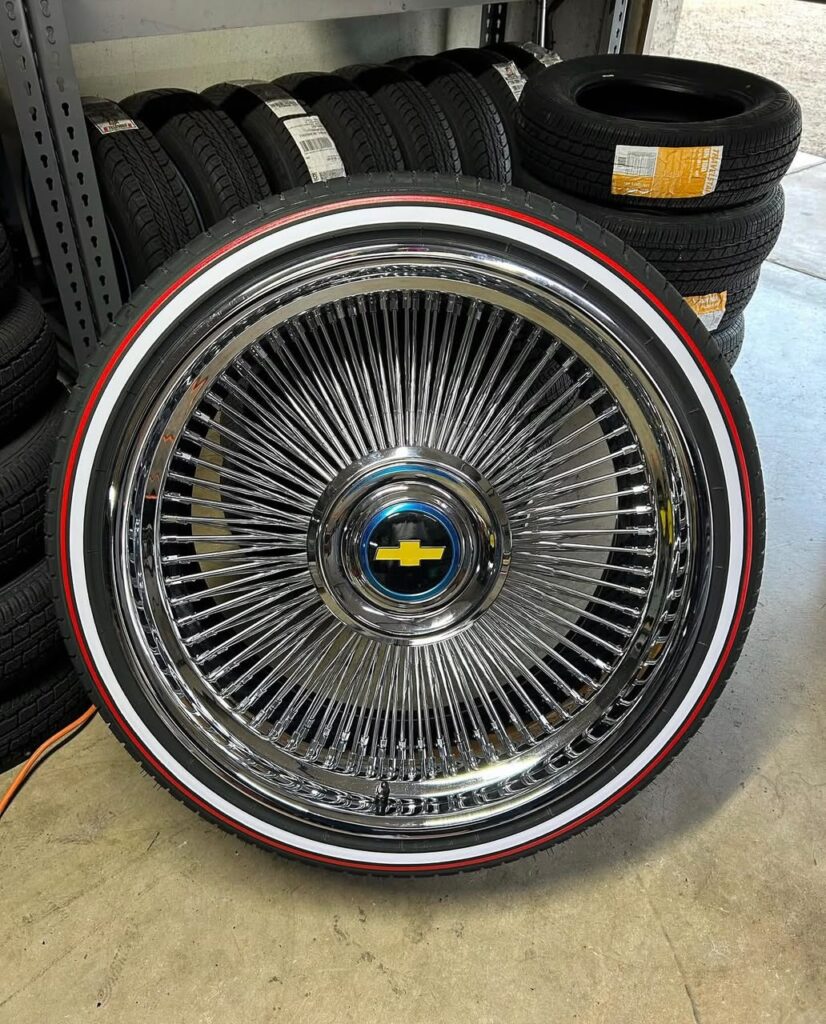
How to Clean and Maintain Wire Wheels The Complete Step-by-Step Guide
You spent months choosing your wire wheels. You spent real money getting them right. You spent hours on the fitment the tire pairing and the complete build to make sure every detail worked together exactly the way you imagined.
The last thing you want is to ruin that investment with the wrong cleaning product the wrong technique or the wrong maintenance routine.
Wire wheels are not like standard cast or forged wheels they have hundreds of individual spokes each with crevices and surface areas where road grime brake dust and road salt can accumulate and begin the corrosion process that destroys chrome plating from the inside out. Cleaning them correctly is not difficult but it requires the right approach the right products and a consistent routine.
This complete guide covers everything you need to know about cleaning and maintaining wire wheels in every finish chrome all-gold gold and chrome two-tone and rose gold with step-by-step instructions products to use products to absolutely avoid and a maintenance schedule that keeps your wire wheels looking show-ready for years.
Why Wire Wheels Need Special Care
Before getting into the how-to it is worth understanding why wire wheels require more careful maintenance than standard wheels because understanding the reason makes it easier to follow the routine consistently.
The spoke design creates more surface area:
A standard cast wheel has a relatively small total surface area the flat faces of five or seven spokes and the barrel. A 100-spoke wire wheel has 100 individual spokes each with four surfaces plus a rim a hub and dozens of nipple points where spokes meet the rim. The total surface area of a 100-spoke wire wheel is many times greater than an equivalent cast wheel and every square millimetre of that surface needs to be clean.
The crevices trap contaminants:
The crossing points of cross-lace patterns the narrow gaps between adjacent spokes at the hub and the threaded nipple areas at the rim are natural traps for road grime brake dust and road salt. These trapped contaminants hold moisture against the chrome or gold surface which accelerates corrosion particularly in the nipple areas where the chrome plating is thinnest.
Chrome is harder than it looks but not invincible:
Chrome plating is extremely hard and scratch-resistant but it is thin typically less than 1 micron on standard wire wheels. The nickel and copper layers beneath the chrome do the real corrosion protection work. Once road salt or acidic contaminants penetrate a microscopic crack or thin spot in the chrome they attack the nickel and copper beneath causing pitting and bubbling that is extremely difficult to reverse.
Gold plating is more delicate than chrome:
California gold plating is softer than chrome and more vulnerable to scratching from abrasive cleaners and aggressive brushes. The warm luminous quality of California gold that makes it so beautiful is also what makes it more demanding to maintain the softer surface shows cleaning marks more readily than chrome.
What You Need The Complete Wire Wheel Care Kit
Getting the right products before you start is essential. Using the wrong products even once can permanently damage chrome or gold plating.
Essential products:
pH-neutral wheel cleaner:
The most important product in your wire wheel care kit. Avoid any cleaner with a pH below 6 or above 8 acidic cleaners attack chrome plating and alkaline cleaners can strip gold plating. Look for products specifically labelled as pH-neutral and safe for chrome and plated wheels. Popular options include Sonax Wheel Cleaner and Chemical Guys Diablo Wheel Cleaner diluted to the appropriate concentration.
Soft spoke brush:
A brush specifically designed for wire wheel spokes long thin bristles that reach between adjacent spokes and into the crossing points of cross-lace patterns without scratching the plating surface. Mothers and Wheel Woolies both produce spoke-specific brushes that are the industry standard for this purpose.
Soft-bristle detailing brush:
For the hub area knock-off and nipple points where the spoke brush cannot reach easily. Natural bristle or very soft synthetic nothing that can scratch.
Microfiber cloths:
Multiple clean microfiber cloths for drying and applying protectants. Never use paper towels or rough cloths on chrome or gold plating.
Chrome polish:
For the final protective step on chrome wire wheels a quality chrome polish like Mothers Mag and Chrome Polish or Meguiar’s Hot Rims Chrome Wheel Polish applied after cleaning creates a protective layer that slows the re-accumulation of contaminants.
Gold protectant:
For gold and gold-plated wire wheels a dedicated non-abrasive metal protectant that is safe for soft gold plating. Avoid standard chrome polishes on gold surfaces as they can remove the gold plating over time.
Avoid these products completely:
| Product | Why to Avoid |
|---|---|
| Household dish soap | Too alkaline — strips protective coatings |
| Bleach-based cleaners | Destroys chrome and gold plating instantly |
| Acid-based wheel cleaners | Attacks chrome and etches plating |
| Steel wool or abrasive pads | Scratches plating irreversibly |
| Pressure washer at close range | Forces water into hub and spoke tension points |
| Oil-based tire dressings | Transfers to wheel surface and attracts grime |
| WD-40 | Not a protectant — attracts dust and grime |
Step-by-Step Cleaning Guide Chrome Wire Wheels
Follow these steps in exact order for best results:
Step 1 Cool the wheels before cleaning
Never clean hot wheels. Wait at least 30 minutes after driving before cleaning applying cold water or cleaner to hot wheels can cause thermal shock that cracks chrome plating. Always clean in shade if possible.
Step 2 Rinse with low-pressure water
Use a standard garden hose not a pressure washer to rinse the entire wheel surface with water. This removes loose surface debris before you apply cleaner and prevents scratching from dragging grit across the surface.
Step 3 Apply pH-neutral wheel cleaner
Spray the cleaner generously across the entire wheel surface spokes hub rim and barrel. Allow the cleaner to dwell for 30-60 seconds to loosen brake dust and road grime. Do not allow the cleaner to dry on the surface.
Step 4 Brush the spokes
Using your spoke brush work systematically around the wheel brush each spoke individually from hub to nipple using back-and-forth strokes. Pay particular attention to:
- Spoke crossing points on cross-lace patterns
- The area immediately around each nipple at the rim
- The area where spokes enter the hub
Work in sections of 10-15 spokes to ensure you do not miss any area.
Step 5 Clean the hub and knock-off
Using your soft-bristle detailing brush clean the hub centre and knock-off thoroughly. The knock-off threads are a particular trap for grime work the brush into the thread area to remove any accumulated material.
Step 6 Clean the rim and barrel
The rim lip and barrel can be cleaned with the spoke brush or a dedicated wheel barrel brush. Pay attention to the inside of the barrel which accumulates brake dust from the rotors and pads.
Step 7 Rinse thoroughly
Rinse the entire wheel thoroughly with the hose working from the top down to carry all loosened grime off the wheel. Rinse the barrel interior as well.
Step 8 Dry immediately and completely
This is the most critical step. Never allow wire wheels to air dry water evaporating from chrome or gold surfaces leaves mineral deposits that are difficult to remove and that can begin corrosion in spoke crevices.
Use clean dry microfiber cloths to dry every surface immediately after rinsing. Use a separate cloth or compressed air to dry the areas around nipples and spoke crossings where water can hide.
Step 9 Apply chrome polish
Once the wheel is completely dry apply a thin even layer of chrome polish to all chrome surfaces using a clean microfiber cloth. Work in small sections using circular motions. Buff to a shine with a clean dry cloth.
The chrome polish creates a thin protective layer that slows the re-accumulation of brake dust and road grime and provides a barrier against road contaminants. Reapply after every 2-3 washes.
Step 10 Treat the knock-off
Apply a thin coat of chrome polish to the knock-off and buff to a shine separately the knock-off is the most visible element of the wheel to show judges and deserves individual attention.
Special Care for Gold Wire Wheels
All-gold and gold center chrome lip wire wheels require modified care because gold plating is softer than chrome and more vulnerable to the abrasive damage that standard chrome cleaning products can cause.
Critical differences for gold wire wheel care:
Use only non-abrasive cleaners on gold surfaces:
The same pH-neutral wheel cleaner that works for chrome is appropriate for gold but ensure it does not contain any abrasive compounds. Even “mild” abrasives in a cleaner can gradually remove gold plating over time.
Use only natural-bristle brushes on gold spoke faces:
Synthetic bristle brushes that are safe for chrome can scratch gold plating. Use a natural-bristle spoke brush on gold spokes the softer bristles clean effectively without risking the plating.
Never use standard chrome polish on gold surfaces:
Chrome polishes contain mild abrasives that remove micro-thin layers of surface material with each application appropriate for chrome but catastrophic for gold plating over time. Use a dedicated non-abrasive gold metal protectant on gold surfaces.
The two-tone gold centre chrome lip clean each zone separately:
On gold centre chrome lip wheels the gold spokes and hub require the gold-safe products while the chrome lip can receive standard chrome treatment. Clean each zone with its appropriate products being careful not to allow chrome polish onto gold surfaces.
Maintenance Schedule Keeping Wire Wheels Show-Ready Year-Round
Consistency is the key to long-term wire wheel maintenance a regular routine prevents the build up that requires aggressive cleaning and reduces the risk of corrosion developing between washes.
After every drive (daily driver builds):
Quick rinse with a hose to remove road salt and fresh brake dust before it dries and bonds. Takes 5 minutes.
Weekly (for regularly driven builds):
Full clean following the complete 10-step process above. Takes 30-45 minutes for a set of 4.
Monthly:
Full clean plus inspection of all spoke nipples for early corrosion signs. Apply chrome polish to all chrome surfaces. Inspect knock-offs for thread condition.
Quarterly:
Full clean plus comprehensive inspection of chrome condition. Check all spokes for correct tension gently pluck each spoke and listen for a consistent clear ring. Any spoke that sounds dull or flat may be losing tension and should be assessed by a wheel specialist.
Seasonally (before winter storage):
If storing a show car for winter apply a generous coat of chrome protectant or car wax to all chrome surfaces. Store in a dry environment away from road salt exposure.
Fixing Early Corrosion Before It Gets Worse
If you notice early signs of corrosion on chrome wire wheels small rust spots particularly around nipples address them immediately before they spread:
Early surface rust:
Use a product like Mothers Chrome Polish or a dedicated rust remover safe for chrome plating. Apply to the affected area with a soft cloth using gentle circular motions. Do not use abrasive compounds or steel wool these will remove more chrome than rust.
Rust around nipples:
Nipple rust is the most common and most serious corrosion location on wire wheels. A spoke nipple tool and a dedicated nipple cleaning kit are available from wire wheel specialist suppliers. Address nipple corrosion early advanced nipple rust can compromise spoke tension and wheel structural integrity.
Pitting or bubbling chrome:
If chrome pitting or bubbling has developed the damage is permanent and cannot be reversed with cleaning products. The affected area requires professional re-plating contact a professional chrome shop for assessment.
Storage Tips for Show Car Wire Wheels
For builds that are stored between show seasons proper storage prevents the corrosion that undoes months of careful maintenance:
- Clean completely before storage never store dirty
- Apply a heavy coat of chrome protectant or carnauba wax before storage
- Store in a climate-controlled dry environment
- Do not store in contact with concrete floors the alkalinity can damage chrome
- Use wheel bags or covers to prevent dust accumulation
- Inspect monthly during storage even stored wheels can develop issues
Frequently Asked Questions
Q: How often should I clean wire wheels?
For daily-driven builds a quick rinse after every drive and a full clean weekly prevents buildup that requires aggressive cleaning. For show cars that are driven occasionally a full clean before and after each outing maintains the finish in show-ready condition.
Q: Can I use a pressure washer on wire wheels?
A pressure washer at low pressure (under 1200 PSI) and held at least 12 inches from the wheel surface can be used for rinsing but never for cleaning with soap or cleaner. High-pressure water forces moisture into spoke tension points and hub areas where it causes corrosion from the inside. A garden hose is always the safer choice.
Q: My chrome has small brown spots near the nipples what do I do?
This is early corrosion at the nipple area the most common and most damaging wire wheel corrosion location. Address it immediately with a chrome-safe rust treatment product. If the spots have grown into pitting contact a professional chrome shop delaying treatment allows the corrosion to spread to the spoke tension components beneath the chrome.
Q: How do I keep my knock-offs tight?
Knock-offs should be checked for tightness after every drive for the first few weeks on a new wheel setup and then regularly thereafter. A dedicated knock-off hammer is the correct tool never use a steel hammer directly on a chrome knock-off. The knock-off thread direction alternates between left and right sides of most vehicles confirm the correct tightening direction for each side before use.
Shop Wire Wheels and Care Products at Alexander’s Tire Services
Keeping your wire wheels in show-ready condition requires the right products and the right knowledge — and Alexander’s Tire Services is your complete source for both.
👉 Contact Us for Wire Wheel Advice
Alexander’s Tire Services — Where Premium Meets Passion.